
Modernization

Elevator technology has moved on considerably — better safety systems, lower energy use and a smoother ride. If your elevators are slow, unreliable or expensive to keep running, modernization brings them up to current standards without rebuilding the hoistway.

Why Modernize Your Elevators?

Checklist icon with two checked items and blank lines on a light blue circular background.

Enhanced Safety & Compliance

Reduce risk and meet ADA, state and federal safety codes

Elevator icon with a person figure and up-down arrows on a light blue circular background.

Improved Performance & Reliability

Smoother rides with fewer breakdowns

Lightning bolt inside a teardrop shape with a magnifying glass outline on light blue background

Energy Efficiency & Cost Savings

Lower operating cost with current drive and control technology
Crossed hammer and wrench tools on a light blue circular background.

Aesthetic and Functional Upgrades

Modern cab interiors and controls to match your building
Full Modernization vs. Targeted Upgrades

Depending on your equipment’s age, condition and budget, Axxiom Elevator Nashville offers a range of options — from a complete modernization to selective component upgrades.

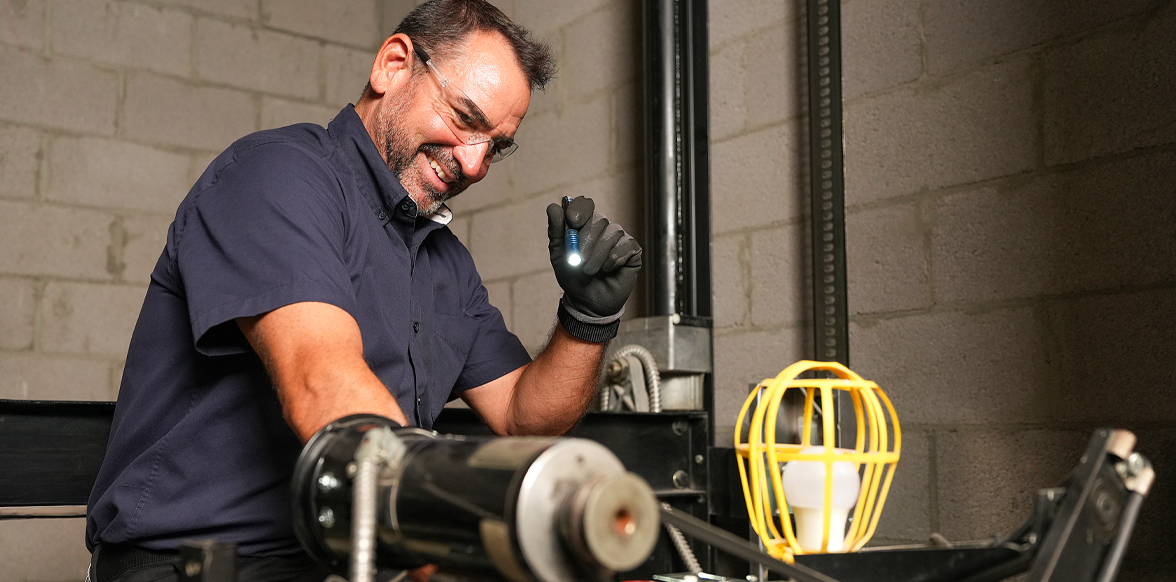
Technician in navy shirt wearing black gloves inspects elevator mechanical components with a headlamp.

Full Modernization

A Complete Elevator Overhaul

On equipment that has reached the end of its service life, a full modernization replaces the major systems rather than patching them one failure at a time. Doing it together avoids the mismatch that comes from pairing a new controller with mechanical equipment that is already worn. What the package covers depends on whether the equipment is hydraulic or traction, and on what the current code requires when the work is permitted.

  • Controller and drive system — Microprocessor controls replace relay logic or ageing boards, taking over dispatch, levelling and door timing. A current controller also reports faults in terms a technician can act on, instead of leaving diagnosis to substitution.
  • Regenerative drive — On traction equipment, this returns the energy produced when a loaded car descends or an empty car rises to the building supply, rather than shedding it as heat through a resistor bank. What that saves depends on your traffic and duty cycle, so it is worth modelling rather than assuming.
  • Hoist machine and motor — Replacing the machine addresses bearing and gear wear that adjustment cannot correct, and matches the mechanical side to the new drive.
  • Door equipment — Operator, hangers, tracks, gibs, restrictor and detection edge. Doors account for a large share of service calls, because they move most often and are the part passengers touch.
  • Fixtures — Hall and car stations, position indicators and LED illumination, with markings and button heights set to current accessibility requirements.
  • Roller guides — Spring-loaded guides in place of fixed slide guides. This is usually the change riders notice most, because it keeps rail irregularities out of the cab.
  • Wiring and travel cable — New connections between controller, machine room and car. Ageing cable and terminations cause intermittent faults, which are the hardest to diagnose and the easiest to keep recurring.
  • Safety features — Emergency braking, door restrictors, car top handrails, pit ladders, and firefighters’ emergency operation: Phase I recall and Phase II in-car operation as defined in ASME A17.1.
  • Cab interior — Wall panels, handrails, ceiling, lighting and flooring, specified to the building rather than a catalogue default.
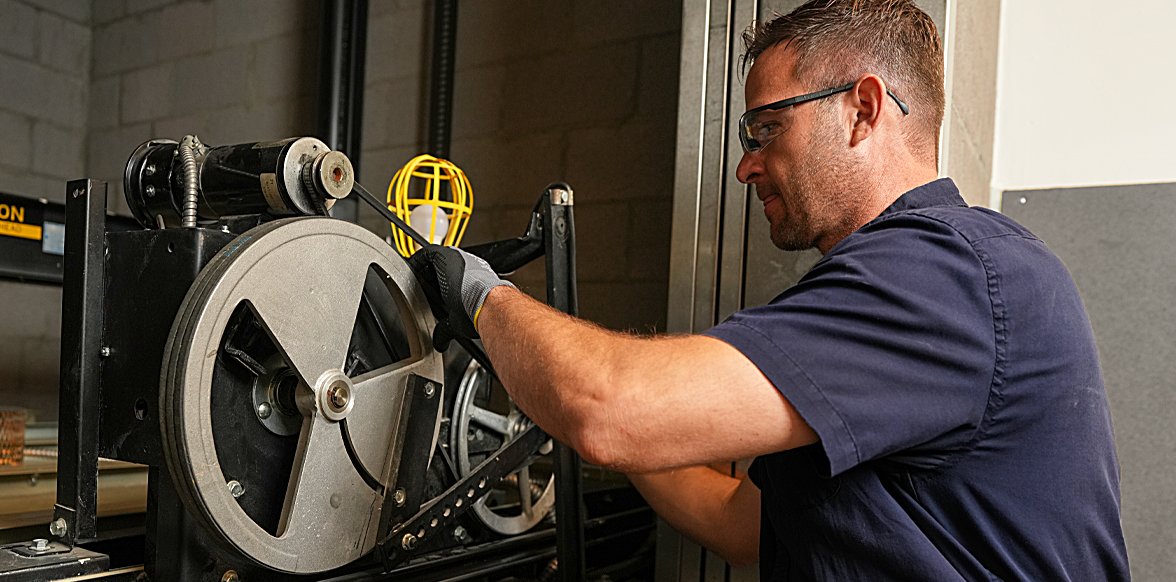
Technician in safety glasses adjusting a large pulley wheel mechanism on industrial equipment.

Targeted Upgrades

Performance Improvements Without a Full Overhaul

Where equipment is sound but short on ride quality, door reliability or code, individual components can be replaced without committing to the whole system. These can be done singly or combined. The practical limit is the controller: replace it outright and the rest generally has to follow, which makes the work a full modernization.

  • Controller CPU board and drive upgrade — Replaces the processing and drive portion while keeping the existing enclosure and wiring, recovering dispatch and levelling performance short of a full controller replacement.
  • Door operator and infrared detector upgrade — Addresses the most common source of service calls, and removes the mechanical safety edge that has to touch a passenger to work.
  • Solid-state motor starter upgrade — No mechanical contacts to burn or weld, so a recurring wear item disappears. It brings the motor up under control rather than across the line, and monitors incoming power for low voltage, phase reversal, phase loss and overload before those conditions reach the windings.
  • Hydraulic pump unit upgrade — Valve, motor, pump, fittings, muffler and reservoir as a matched set. Replacing the unit is what corrects ride quality on hydraulic equipment; replacing the valve alone usually does not.
  • Roller guides — The same spring-loaded guides described above, available on their own where the rest of the equipment does not yet warrant modernization.
  • Code compliance upgrade — Car top handrails, door restrictors, pit ladders, accessible communication devices, cylinder replacement on hydraulic equipment, and firefighters’ emergency operation where equipment predates the requirement.
  • Cab interior — Wall panels, handrails, ceiling and lighting, which can be done independently of mechanical work and scheduled around building occupancy.

Get Your Elevators Up to Standard

Outdated equipment costs more to run and more to fix. Talk to Axxiom Elevator Nashville about which modernization path fits your building and your budget.

Call (615) 772-8005 — our line is answered 24 hours a day, seven days a week.